

Providing Quality Oil Change Service for Any Make or Model!
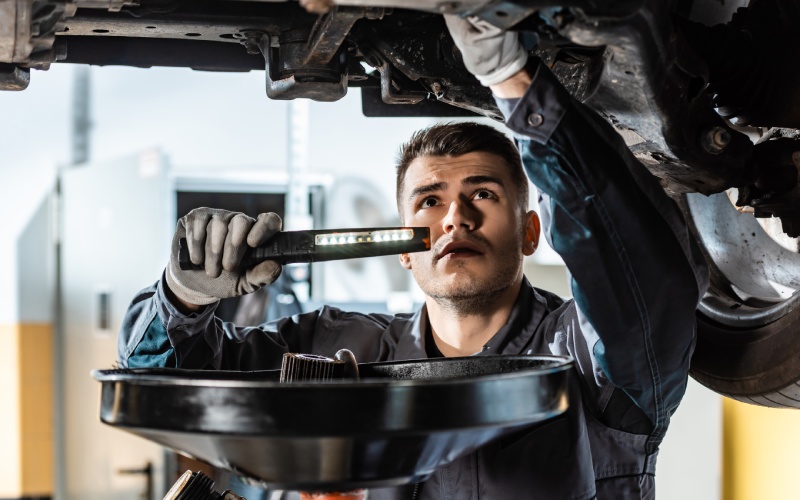
Sheboygan Quick Lube Plus – How Often Should I Change My Oil for Mixed Driving in Sheboygan, WI
When your weeks swing between quick downtown errands on 8th Street and longer I-43 runs past the Sheboygan River, the “right” oil change interval gets less obvious. Mixed driving — short trips, stop-and-go, and highway stretches — ages oil differently than steady cruising. The goal is to match the interval to how you actually drive, not just the odometer. Below, we break down the signs, schedules, and smart habits that keep your engine protected in and around Sheboygan without over-servicing.
What counts as mixed driving around town?
Short hops from Washington Ave to errands near the lakefront, idling in school pickup lines, and frequent cold starts all count as severe service. Those patterns never let oil reach and hold full operating temperature, so moisture and fuel dilution build faster. Add a few weekly highway miles on I-43 or County A, and you have classic mixed use. That blend makes a time-based boundary as important as mileage. Even if you do not hit your manual’s miles, oil chemistry and additives age on the calendar with repeated warm-up and cool-down cycles.
In practice, many Sheboygan drivers alternate weeks — busy local errands mixed with one or two longer highway legs. If that is you, think of oil life as a bank account. City miles “spend” it faster; highway miles spend it slower. Your interval should reflect your actual ratio rather than a one-size-fits-all guess.
Typical intervals by oil type and vehicle guidance
Owner’s manuals and maintenance reminders should steer your baseline. Most modern vehicles specify full synthetic and extend normal-service intervals. But “normal” rarely fits city-heavy patterns. Many mixed-use vehicles do best with a conservative synthetic interval while respecting any oil-life monitor.
- Conventional baseline: Often 3,000–5,000 miles under mixed or severe service, especially for older engines.
- Semi-synthetic baseline: Commonly 4,000–6,000 miles when trips are short, and temperatures vary.
- Full synthetic baseline: Typically 5,000–8,000 miles under mixed driving, adjusted by the vehicle’s oil-life algorithm.
- Time limit: Six months to one year maximum between services, even at low mileage, to refresh additives.
If your dashboard uses an oil-life system, honor it — just know that many systems learn from your starts, speeds, and temps. City cycles can pull the percentage down faster than you expect, which is exactly the point.
Patterns that shorten safe intervals
Oil’s job is to separate moving parts, suspend contaminants, and control heat. Anything that adds contaminants or extra heat shortens its usable life. Around Sheboygan, the usual suspects include repeated short trips, extended idling while parked lakeside, towing a small trailer to Kohler-Andrae State Park, or running roof cargo that raises engine load on highway climbs. Frequent stoplights on 14th Street or slower stretches through neighborhoods add heat cycles, too.
- Short trips under 10 miles: Oil never fully warms to evaporate moisture and fuel dilution.
- Frequent cold starts: Extra enrichment increases raw fuel washdown and dilution risk.
- Extended idling: Heat and oxidation rise without the cooling effect of steady airflow.
- Towing or heavy loads: Higher engine load shears oil faster and raises sump temperatures.
- Dusty routes or gravel: Increased intake contamination stresses filtration and oil.
If several of these apply to your week, choose the low end of your oil’s recommended range and stick to a time cap. It is easier — and cheaper — to shorten an interval than to undo sludge or bearing wear.
What we check during a quick stop
Oil is one piece of a reliability puzzle. When you pull in, our team replaces your oil and filter with the specification recommended for your make and model and performs a courtesy multi-point lookover. We verify fluid levels, scan for obvious leaks, look at belts and hoses, and check your battery health. Many premature oil-life warnings trace back to weak batteries or clogged engine air filters that skew fuel trims; catching those early keeps your interval on track. If you mention a change in oil color, odor, or consumption, we document it and talk through whether an earlier follow-up is smart.
We also listen to your driving pattern. If you mostly run downtown, we may suggest a slightly shorter synthetic interval than the manual’s upper limit. If you rack up smooth highway miles to and from Manitowoc or Fond du Lac, we will explain where you can safely extend — as long as your oil-life system agrees and your engine shows no signs of dilution or consumption.
For many residents, pairing an oil change with a 27-point courtesy inspection, a quick tire rotation, and an alignment check makes sense. Even tread wear and correct alignment reduce rolling resistance and engine load, which indirectly supports healthier oil temperatures and longevity between services.
Frequently Asked Questions:
Is time or mileage more important for mixed driving?
Both matter. If your miles are low but your trips are short, use a firm time cap to prevent additive depletion and moisture buildup — even if you have not hit the mileage limit.
Can a full synthetic always go 10,000 miles?
Not under severe or city-heavy use. Many vehicles can safely reach longer intervals on steady highway cycles, but mixed driving usually calls for a shorter window guided by your oil-life monitor.
Do short trips really hurt oil that much?
Yes. Repeated cold starts and brief drives prevent full warm-up, which accelerates moisture, fuel dilution, and acid formation. That chemistry is why shorter intervals are recommended for city patterns.
Will an engine air filter change help my oil last longer?
Indirectly, yes. A clean filter supports proper air-fuel balance, reducing fuel dilution and soot that stresses the oil. It is a simple, quick service with outsized benefits for mixed driving.
When you are ready for a sensible, pattern-based interval, our quick lube team will match oil type and schedule to your real-world routine. We service all makes and models, welcome walk-ins, and help you leave with a plan that fits how you drive around Sheboygan and the surrounding communities.
Request more information
Connect with us

